
Sit outside at dusk on a late spring, summer or early fall evening and with some luck you might notice bats swooping against the twilight sky. You might also notice them emerging from your home’s chimney or eaves, leading you to wonder, “Do I have bats in my attic?” Maybe…but don’t panic! 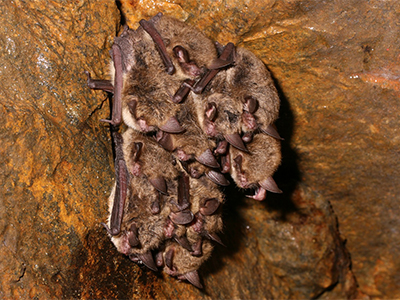
Not only are bats a vital part of the ecosystem—they disperse seeds, eat insects and some even pollinate fruit and flowers—but healthy bats avoid humans and are not aggressive. (Do not handle bats though. Their sharp teeth can puncture skin, especially if the bats are handled improperly. For advice on removing a single bat from the house, read this article on the Penn State Extension website.)
Plus, many bat species have official legal conservation status, explains WPC Senior Director of Conservation Science Emeritus Charles Bier. “And there are additional regulations above and beyond just being a native mammal,” he notes. “For example, the little brown bat (Myotis lucifugus) is listed as endangered in Pennsylvania. Therefore, it has additional protections.”
Exclude Bats Safely
“People should not be thinking about ‘removing’ bats, but rather should figure out how to prevent their entrance to the building,” Charles says. This can be done by the building owner or by a hired licensed animal control professional. There are requirements and regulations that animal control agents must follow when working with bats.
Between September and early April, while the bats hibernate in caves and abandoned mines, is the time to prevent them from re-entering a building (or “exclude them from”) before spring. “Building owners should avoid excluding mother bats from an attic roost when their pups are in the attic during development in summer,” Charles says. Learn more on the Bat Conservation and Management website.
The Penn State Extension website provides this guidance on the timing of excluding bats from a building:
- January to April: Seal entrances before bats return to the building. (Charles suggests January to March.)
- May to August: Watch bats to identify entrances. Do not seal openings.
- August to October: Install one-way door(s).
- November to December: Seal entrances once bats have left the building.
Besides observing at twilight, another way to identify where the bats are entering or exiting the building is to look for slight staining on the siding and eaves, says Charlie Eichelberger, WPC vertebrate zoology manager with the Pennsylvania Natural Heritage Program. “Their fur contains natural oils, and they never shampoo—so over time there will be an accumulation of ‘grease’ where they go in and out, which can show up on the siding.”
Other Ways You Can Protect Bats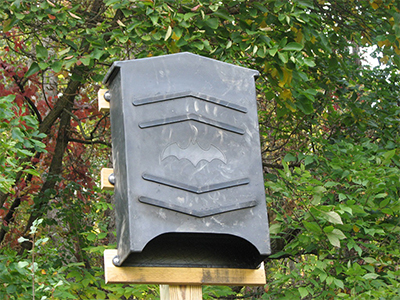
- When excluding bats from a building, establish a bat house nearby if at all possible, says Charles. You can purchase a bat house through BCM or the Pennsylvania Game Commission’s Howard Nursery, or find do-it-yourself construction plans on the Pennsylvania Game Commission website.
- If you own forested land, consider leaving some dead trees and large trees standing for bats to roost in, if it’s safe to do so.
- Do you suspect the bats in your attic are little brown bats? Because this species is endangered in Pennsylvania, “Building owners should contact the Pennsylvania Game Commission, which can provide proper guidance and possibly assistance with minimizing impacts to a colony of little brown bats during an exclusion,” says Charlie, adding a bit wistfully, “I wish I had little browns on my property!”
Visit our webpage about the threats to bats and our work to study and protect them.