
Little Arnot Run
Turning Back Time: Restoring the Ecology of Little Arnot Run
A team of conservationists add large woody materials to a historically degraded stream in northwest Pennsylvania to rebuild its integrity.
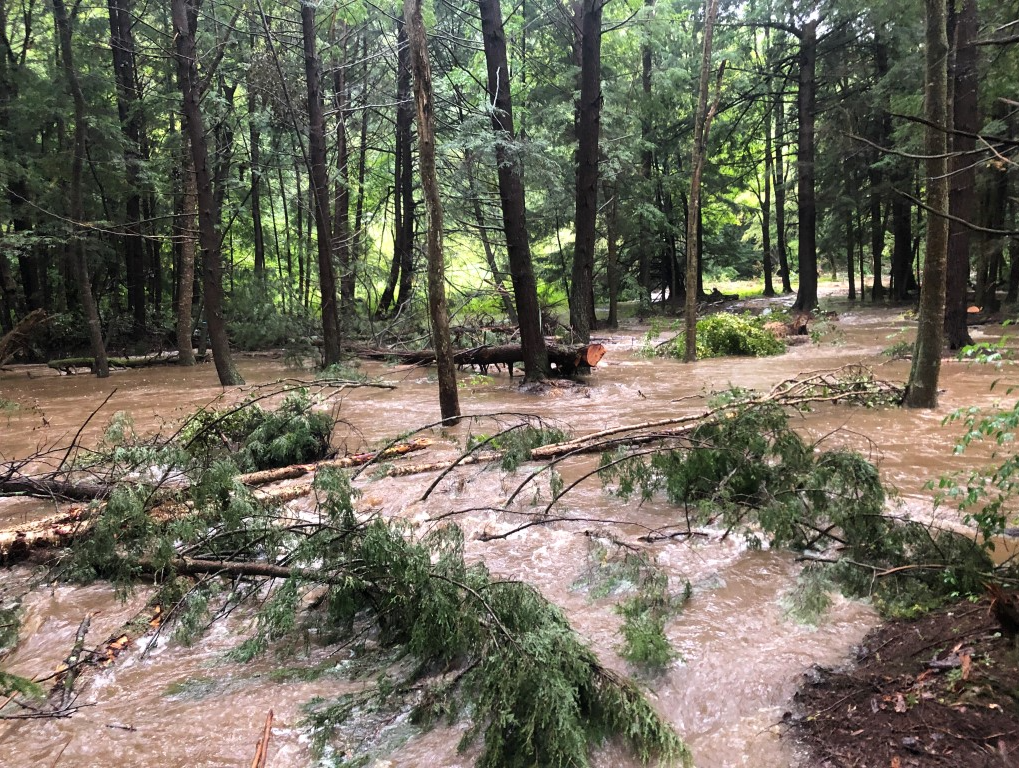
Additions of large woody materials (LWM) to Little Arnot Run mimics a natural process. In this photo of Structure 1 during a flood, the LWM helps disperse flood waters onto the floodplain, preventing the fire hose effect.
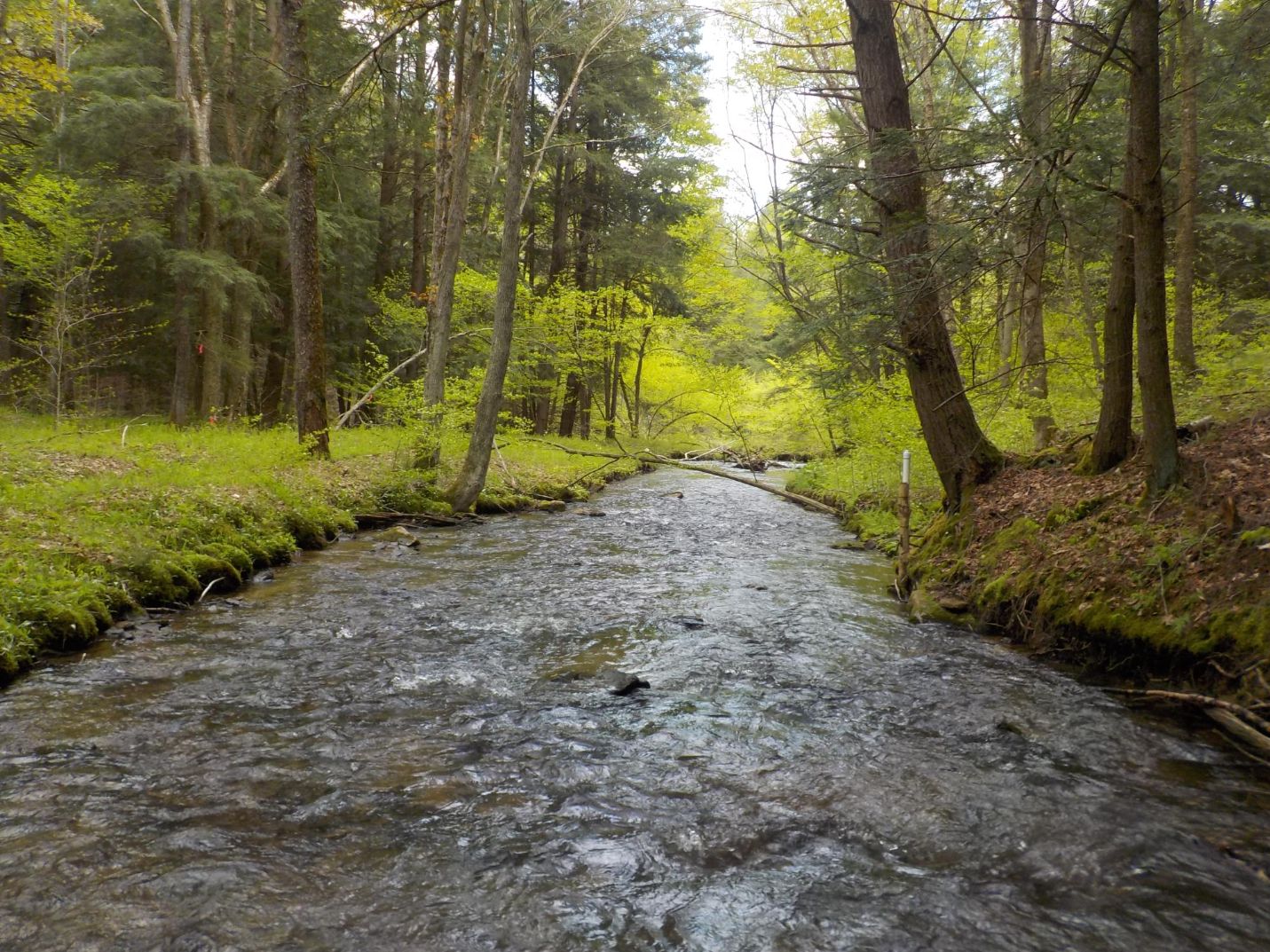
Man-made changes to Little Arnot Run in the 1800s changed its winding stream channel to a straightened ditch that facilitated transportation of marketable goods, including timber.
Despite Little Arnot's excellent water quality, the floodplain wetlands in this headwater stream valley are highly modified and their ecological function has been compromised. This has led to a number of issues downstream.
Little Arnot Run is typical of streams in the Allegheny National Forest and Allegheny Plateau ecoregion of Pennsylvania. Logging, natural gas, and oil development activities that occurred nearly two centuries ago straightened this and others stream channels in the area. In the case of Little Arnot Run, the stream channel became confined to one side of the floodplain.
About Little Arnot Run
Restoring and Protecting Local Rivers and Streams
Little Arnot Run's six river miles are nestled within a roughly 3.5 square mile forested watershed in the Allegheny National Forest of northwest Pennsylvania.
The stream is classified as an exceptional value stream by the Pennsylvania Department of Environmental Protection (DEP), the highest stream designation given by the DEP. It boasts excellent water quality and houses a naturally reproducing population of native brook trout.
Why Add Large Woody Material?

"To our eyes, natural woody 'debris' is messy, chaotic, and undesirable. However, to a natural channel-valley ecosystem, that messy, chaotic debris forms a critical base component of ecological processes."
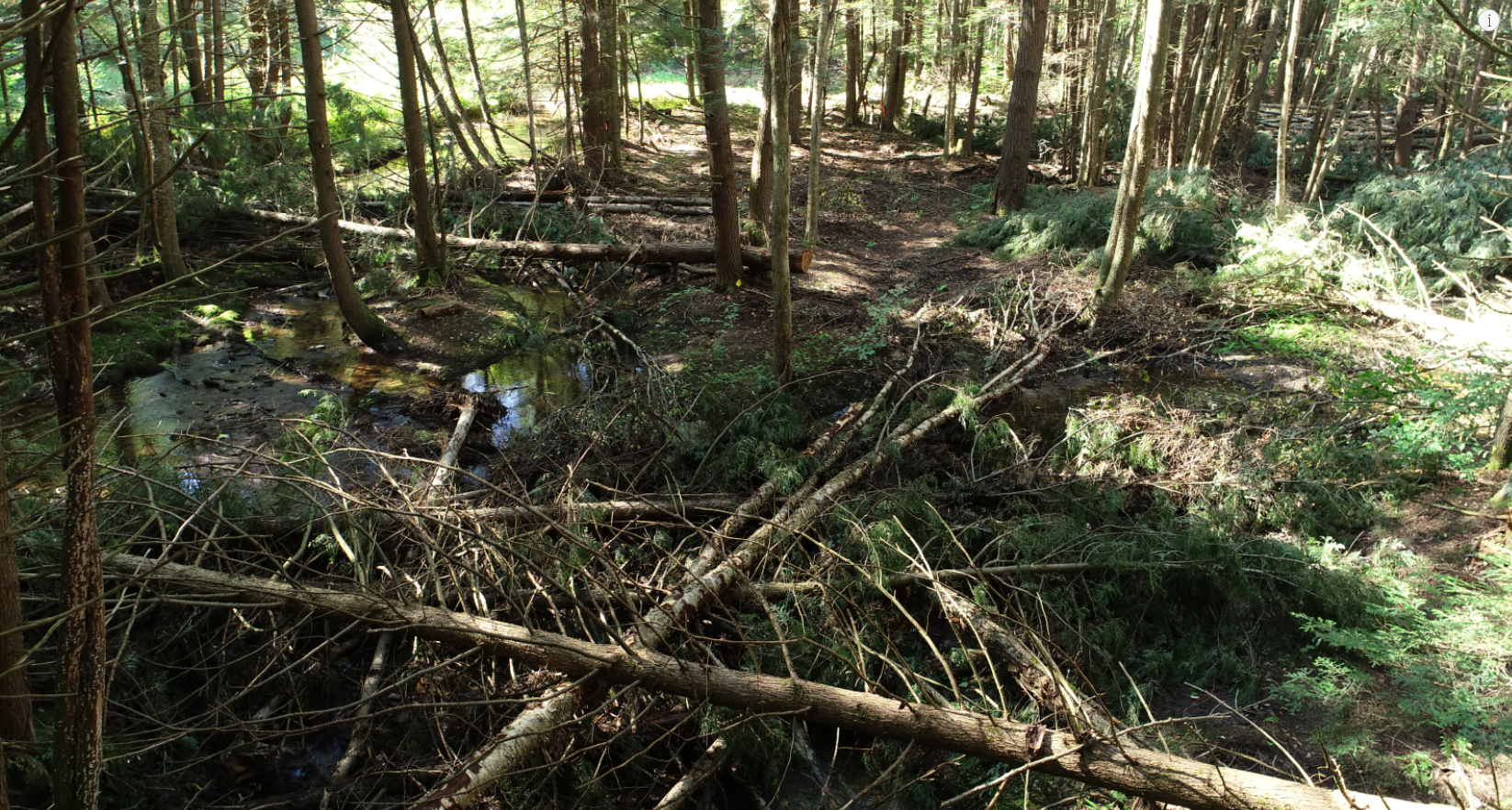
Large woody material restoration refers to the carefully planned addition of logs, root wads, and piles of branches into a stream or other water system with the purpose of restoring a more natural stream pattern.

Restoration practitioners from the Allegheny National Forest (ANF) and the Western Pennsylvania Conservancy (WPC) carefully selected large pieces of wood and strategically placed them to alter Little Arnot's flow across the headwater valley. This activity would, given time, return a more natural stream pattern to the stream ecosystem which had been lost due to human intervention over 100 years earlier.
BEFORE

AFTER
Why It Matters
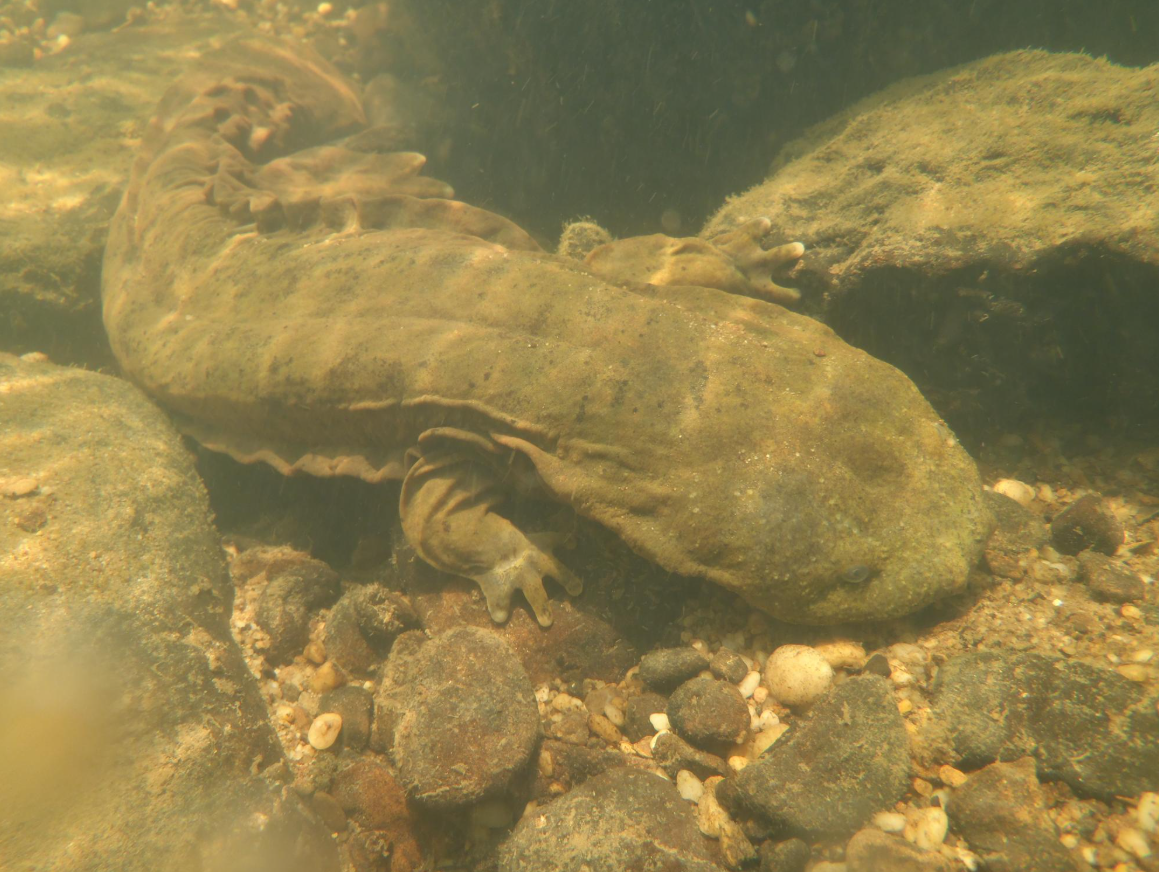
Sediment pollution from heavy flooding can impact many aquatic species, including the Eastern hellbender, Pennsylvania's state amphibian.
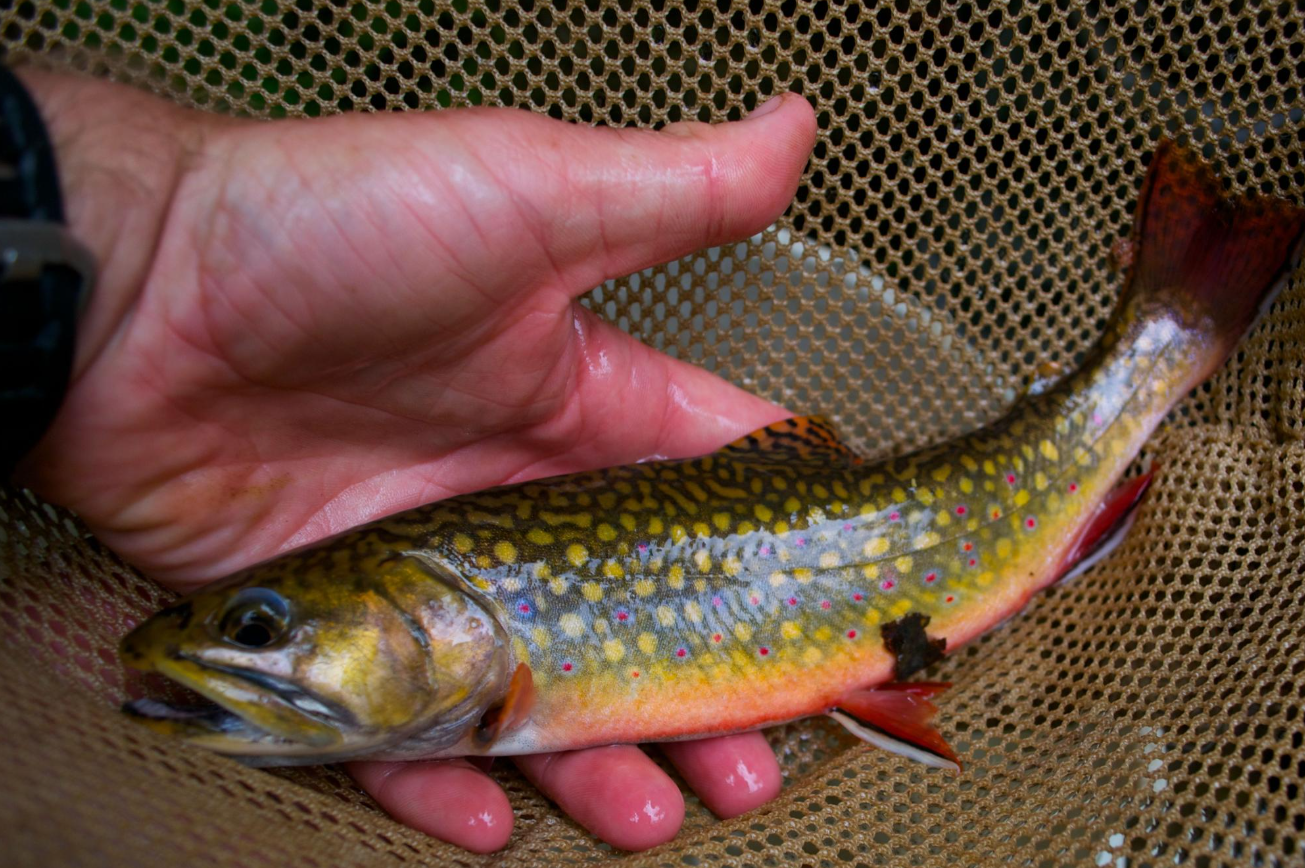
The restoration efforts at Little Arnot Run showed a positive effect on fish biomass, especially for native brook trout. The increase in 'young of year' (YOY) trout and biomass at restoration sites suggests that the habitat improvements are benefiting the fish community.
Acknowledgements
Numerous organizations contributed their time and expertise to this project, bringing its many aspects of planning, implementation, and monitoring to fruition.
-
Allegheny National Forest
-
Western Pennsylvania Conservancy
-
Bucknell University
-
Gannon University
-
Commonwealth University of Pennsylvania - Lock Haven
The ecological restoration of Little Arnot Run brought together a collaborative group of over 75 experts, students, interns, and volunteers from federal, state, non-profit, and academic entities. Contributions from all participating individuals and organizations are greatly appreciated.
Funding for this work was provided by US Forest Service, US Environmental Protection Agency, PA Department of Environmental Protection, and Department of Conservation and Natural Resources.
For More Information:
Watershed Conservation Program
Western Pennsylvania Conservancy
1067 Philadelphia Street, Suite 101
Indiana, PA 15701