WPC Staff
Alysha Trexler
Watershed Project Manager
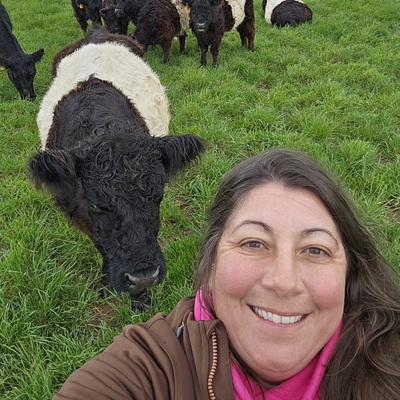
Raising grass-fed beef on her rural Indiana County farm isn’t just a side-job for Alysha Trexler — it’s a living example of a farm integrating conservation practices. So when the WPC watershed project manager talks with farmers and other landowners about how they can help improve water quality, she’s got street-cred — or farm-cred, as the case may be.
“I like to talk to people about what they love,” she says, “and help them connect what they love to what needs done to improve or protect it.”
Alysha’s wide-ranging role includes water quality and biological monitoring, physical stream habitat assessment, agriculture best management practice and nutrient management development, riparian habitat improvement design and installation, and public education and outreach. She’s currently managing a multi-year riparian restoration project that utilizes all of those roles.
After serving with WPC as an AmeriCorps in watershed in 2003 and 2004, Alysha became an employee in 2005. She holds a bachelor science in biology with a chemistry minor from Indiana University of Pennsylvania, and has SCUBA and PA Nutrient Management certifications.
The seasons drive her schedule and projects. In spring and fall, she plants trees for riparian projects. Warmer months find her “out in streams assisting with fresh water mussel, hellbender salamander or fish surveys.” In between field work, she speaks with students and partners about improving and protecting water quality and meets with landowners about projects.
Sometimes that means reeducating people or dispelling misconceptions.
“Encouraging the public to support water quality improvement is challenging,” she says. “One cannot always ‘see’ polluted water become cleaner as it flows through the roots of trees. The polluted water appears clear– and clear can be misinterpreted as clean.”
Even defining what constitutes a stream is important. “A landowner might have a stream in very poor condition flowing through their property, but if they think it’s ‘just a ditch,’ they won’t think that it needs improved or protected!”
It all worth it, she says, knowing she is “helping the agriculture community see that conservation and farming don’t compete with each other.”
The following lists some of the ways you can volunteer at the Conservancy. We welcome volunteers to help in our community flower gardens, plant trees or maintain our preserves and trails, among other tasks. View a list of our current or upcoming volunteer opportunities and register for one today.