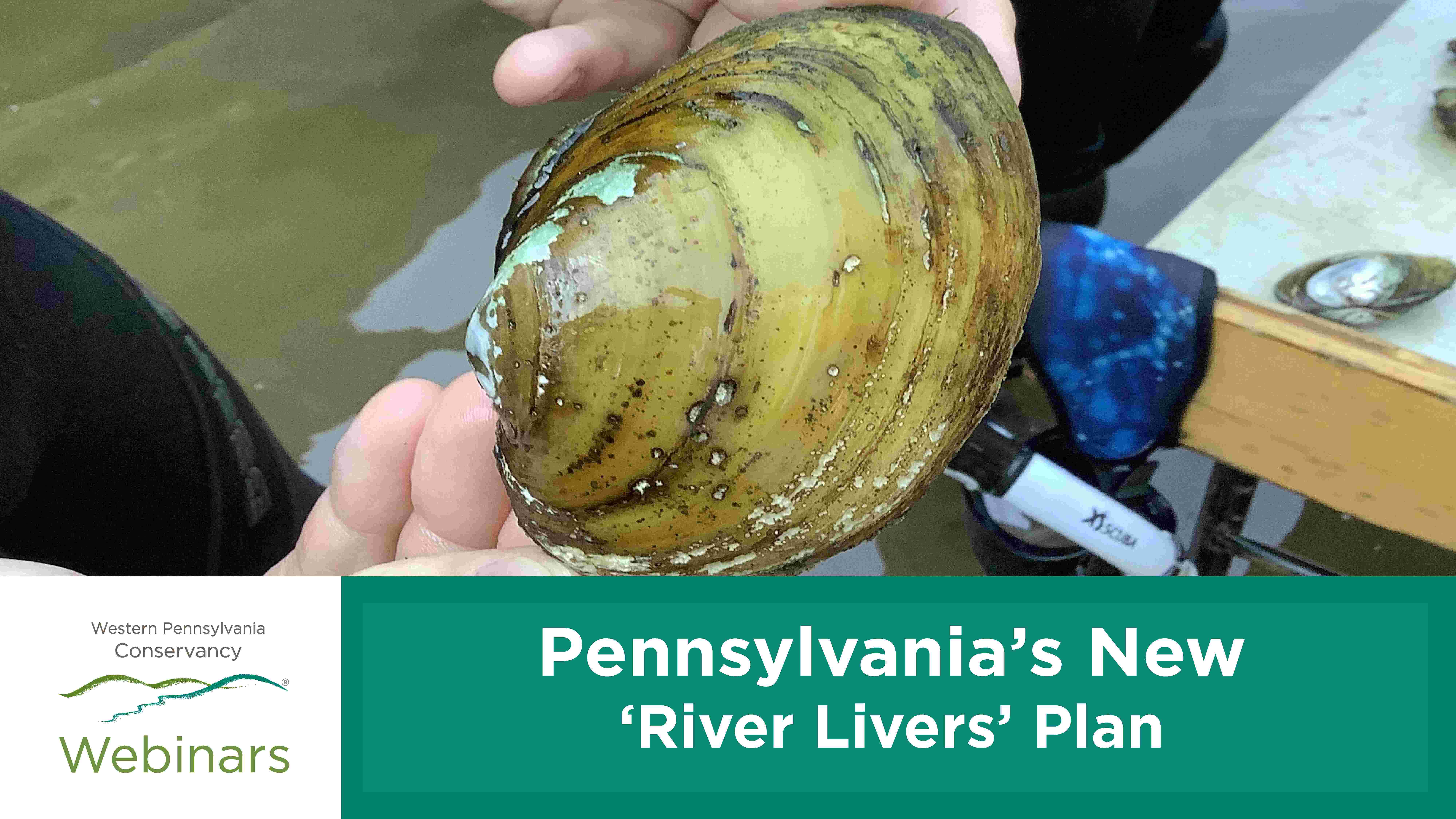
Freshwater mussels, also known as river livers, are vital for their ability to filter and clean approximately 10 gallons of water each day, purifying the water in local rivers and streams as they breathe and feed.
That process naturally improves water quality, provides food for wildlife, and helps shape aquatic ecosystems for the better. So, an abundance of freshwater mussels means cleaner waters in our rivers and streams.
But for decades, poor water quality from pollution caused by industrial waste or agricultural runoff has led to sharp declines in freshwater mussel populations across the state. Today, climate change and biodiversity loss threaten the species, too.
The Western Pennsylvania Conservancy’s watershed scientists have been surveying and monitoring mussels in Western Pennsylvania for decades. But for the past five years, along with the PA Fish and Boat Commission, our team has been surveying basins across Pennsylvania to evaluate the presence, population sizes and diversity of freshwater mussels.
Thanks to funding from the National Fish and Wildlife Foundation that statewide research informed the new Pennsylvania Freshwater Mussel Conservation Plan, a comprehensive conservation plan and database that houses the Commonwealth’s known freshwater mussel information and statistics from 1838 to 2024.
The plan provides conservation professionals, landowners with streams, and land managers with baseline data and guidance on assessing and prioritizing conservation and management efforts to help mussel species flourish.
In this webinar, learn why freshwater mussels are important to entire watersheds, which water quality indicators warrant actions, and discover what conservationists are doing to help improve mussel populations. You’ll also learn ways you can help reduce pollution and invasive species from entering local rivers and streams.
Whether you call them nature’s filter feeders, ecosystem engineers or river livers, freshwater mussels are one of nature’s most unique and vital species, and we all play a role to ensure their populations sustain and increase across the Commonwealth.
Join us for this free webinar, “Pennsylvania’s New ‘River Livers’ Plan,” on Nov. 16, 2026, at 12 p.m. ET. Can’t attend in person? Register and after the webinar you’ll get a link to watch the recording.